Month: May 2025

  • Gurgaon’s New Highway Project – Latest Update & Benefits

    Gurgaon’s New Highway Project – Latest Update & Benefits

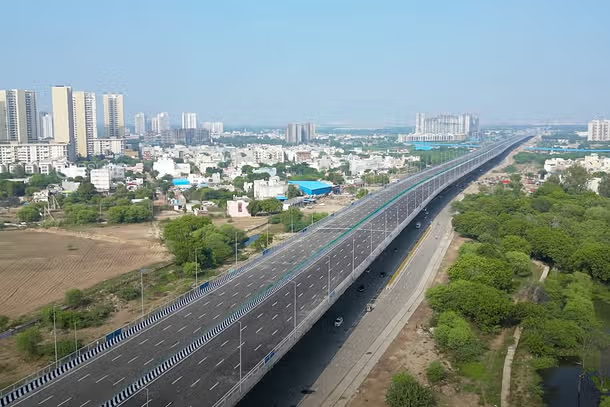
    The Haryana government has approved a major infrastructure project worth ₹616 crore to convert the Hodal–Nuh–Pataudi–Patauda road into a 4-lane highway, part of which will pass through Gurgaon district.

    Key Details:

    • Length: Approx. 71 kilometers
    • Districts Covered: Gurgaon, Palwal, and Nuh
    • Purpose: To improve freight and passenger movement

    Major Benefits for Gurgaon:

    1. Enhanced Connectivity
      The highway will connect Gurgaon to four national highways:
      • NH-19 (Delhi–Mathura–Agra)
      • NE-4 (Delhi–Mumbai Expressway)
      • NH-248A (Gurgaon–Nuh–Rajasthan)
      • NH-48 (Delhi–Jaipur)

    Better Access to Rural Areas
    Several villages in Gurgaon district like Bilaspur, Pathreri, Bhajlaka, Pataudi, and others will have direct access to a national-level highway network.

    Economic Boost
    Improved road infrastructure will promote local trade, real estate growth, logistics, and small businesses, generating employment opportunities.

    Reduced Traffic & Accidents
    A 4-lane road will ease traffic congestion, especially on current narrow routes, and is expected to reduce accidents.

    Faster Project Execution
    New tendering policies ensure that if the lowest bidder backs out, the contract can be immediately passed to the next eligible bidder—avoiding delays.
  • Ganga Realty new launches A Dream Investement Opportunity projects in gurgaon

    Ganga Realty new launches A Dream Investement Opportunity projects in gurgaon

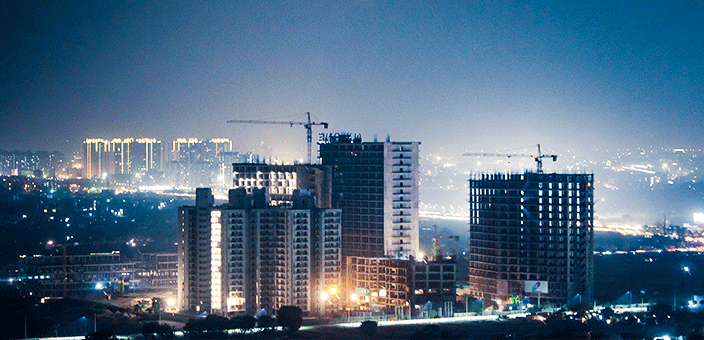
    Ganga Realty, a prominent real estate developer, has recently launched several high-end residential projects in Gurgaon, catering to the growing demand for luxury living spaces. These projects are strategically located and boast state-of-the-art amenities, making them attractive options for both homebuyers and investors.

    🏙️ Ganga Realty Nandaka – Sector 84, Gurgaon

    Ganga Realty Nandaka is a luxurious residential project spread over 8.35 acres in Sector 84, Gurgaon. The development comprises four towers with 46 floors each, offering a total of 320 units. The apartments range from 3 BHK to 4 BHK configurations, with sizes between 3,050 sq. ft. and 8,000 sq. ft. Prices start at ₹3.25 crore, with pre-launch rates at ₹13,250 per sq. ft. and inaugural prices at ₹12,500 per sq. ft. for the first 150 units.

    Key Features:

    • Two private elevators per apartment, along with a dedicated service elevator.
    • 5 infinity swimming pools, a 1,00,000+ sq. ft. clubhouse, and a cigar room.
    • VRV/High Wall air conditioning and 100% green and club-facing units.
    • Proximity to Dwarka Expressway, NH-8, and a 25-minute drive to IGI Airport.
    • Designed by UHA London, with JLL and CBRE as strategic partners.

    Ganga Realty’s projects in Gurgaon are strategically located with excellent connectivity to major highways, airports, and commercial hubs. The inclusion of world-class amenities, sustainable design, and partnerships with renowned architects and consultants make these developments highly attractive for investors and homebuyers seeking luxury living spaces in the NCR region.

  • India-Pakistan War: Potential Impact on the Indian Real Estate Market

    India-Pakistan War: Potential Impact on the Indian Real Estate Market

    In the history of global economics, geopolitical tensions like wars have had far-reaching consequences not just on political landscapes, but also on sectors such as real estate, stock markets, currency value, and foreign direct investments. The recent escalation of tensions between India and Pakistan in 2025 is sending ripples across markets, and the Indian real estate sector is no exception.

    This blog explores in-depth how a possible India-Pakistan war could affect India’s real estate marketresidential, commercial, and investment-oriented segments.

    1. Immediate Market Sentiments: Panic and Precaution

    • Wars trigger fear and uncertainty, and the real estate market thrives on long-term stability.
    • Buyers may delay purchases, leading to lower transaction volumes.
    • Sellers may lower prices to liquidate properties faster.
    • Developers could pause launches due to raw material price volatility and market anxiety.

    2. Stock Market Link and Developer Stocks

    • Real estate developer stocks like DLF, Godrej Properties, Prestige Estates often reflect market sentiment before the actual property market does.
    • In a war scenario, Nifty Realty Index might plunge, leading to investor hesitation.
    • Loss in stock market value can restrict capital flow into real estate projects.

    3. Impact on Property Prices: Area-wise Differentiation

    Metro Cities (Delhi, Mumbai, Bangalore)

    • Short-term price stagnation or mild decline expected due to reduced demand.
    • Premium segment suffers the most as luxury purchases get delayed.
    • Middle-class buyers wait for economic clarity, affecting 1BHK and 2BHK flat sales.

    Conflict Zone Border States (Punjab, J&K)

    • Real estate markets may collapse temporarily in border cities like Amritsar, Pathankot.
    • People may migrate towards metro cities, affecting urban rental demand.

    4. Investor Behavior in Times of Conflict

    • Investors look for safe-haven assets, and real estate could become less favorable than gold or fixed deposits.
    • NRI investors pause India transactions, especially for Delhi NCR and Mumbai properties.
    • Speculative buying halts, leading to market cooling.

    5. Loan Disbursal & Banking Sector Strain

    • War leads to pressure on banks for defense-related liquidity.
    • Expect tightening of home loan disbursement, affecting affordable housing buyers.
    • 90% loan flats in Dwarka Mor and Mansa Ram Park may witness reduced traction.

    6. Raw Material Disruption

    • Cement, steel, paint prices may surge due to transport disruptions and import challenges.
    • Construction halts likely, especially in Tier 2 and Tier 3 cities.
    • Ongoing projects may be delayed by 3–6 months, increasing buyer uncertainty.

    7. Rental Market During Conflict

    • Migration from conflict areas increases rental demand in safe zones like Delhi NCR, Bangalore, and Hyderabad.
    • Rental prices may increase temporarily, especially in areas like Nawada Metro Station, Uttam Nagar, and Rama Park Road.

    8. Government and Military Housing Influence

    • Defense housing demands may increase near cantonments.
    • Governments may divert funds away from urban development projects to defense expenditure.
    • Expect delay in smart city infrastructure projects.

    9. Luxury vs Affordable Segment Impact

    SegmentWar Impact
    Affordable (1BHK–2BHK)Less affected, but demand slows
    Mid-Segment (2BHK–3BHK)Slight price drop
    Luxury (4BHK, Villas)Sharp drop in buying
    CommercialHigh risk, tenants delay new leases
    IndustrialHigh risk, especially if near conflict zones

    10. Long-Term Recovery and Rebound Possibility

    • If the war is short-lived, markets may bounce back with government relief and incentives.
    • Long conflicts result in prolonged low confidence, leading to a 2–3 year slump in new launches.
    • Investors looking for distressed assets may re-enter markets late in the conflict.

    11. Real Estate in Delhi NCR: A Closer Look

    • Dwarka Mor, Nawada Metro, Rama Park Road, Mansa Ram Park: Popular for affordable flats.
    • 90% loan-backed buyers may find it tough to secure bank approvals.
    • Expect lower site visits and online enquiries in the next few months.
    • However, Delhi’s status as a political capital may keep prices from crashing.

    12. Key Opportunities During Crisis

    • Resale properties may become cheaper—good for cash-rich buyers.
    • Investors may find value in undervalued commercial properties.
    • Rental income becomes more attractive in safe urban zones.

    13. Case Study: 1999 Kargil War and Real Estate

    • The 1999 Kargil War created temporary fear, but the market stabilized within 12 months.
    • NCR and Mumbai saw price stagnation, but not massive crashes.
    • The post-war economic push led to a real estate boom by 2001.

    14. What Should Buyers and Sellers Do?

    For Buyers:

    • Wait and watch before making new investments.
    • Target ready-to-move properties instead of under-construction.
    • Check builder’s financial stability before booking.

    For Sellers:

    • Be realistic in pricing.
    • Offer flexible payment plans to attract cautious buyers.
    • Focus on rental opportunities if sale is not urgent.

    15. Real Estate Marketing Strategy During War

    • Highlight safety, accessibility, and affordability in campaigns.
    • Use digital marketing, since physical site visits may decline.
    • Offer EMI holidays, zero down payment schemes, and construction-linked plans to regain traction.

    16. Expert Opinions and Market Forecasts

    • Most analysts suggest temporary slowdowns, but not a market crash.
    • Foreign investors may pause but not pull out if diplomatic stability is restored quickly.
    • Government stimulus post-conflict can fuel recovery.

Compare